
![PXL_20250606_085911309.PORTRAIT[1]](https://stonefarms.org/wp-content/uploads/2025/06/PXL_20250606_085911309.PORTRAIT1-768x432.jpg)
![PXL_20250606_085930280.PORTRAIT[2]](https://stonefarms.org/wp-content/uploads/2025/06/PXL_20250606_085930280.PORTRAIT2-768x432.jpg)
At STONEFARMS, we are pioneering sustainable, space-efficient farming systems to transform food production in Cameroon. In our experimental nursery in Dschang, West Region, we’ve implemented innovative soilless cultivation techniques that not only optimize space and resource use but also open up new opportunities for eco-conscious farming and urban agriculture.
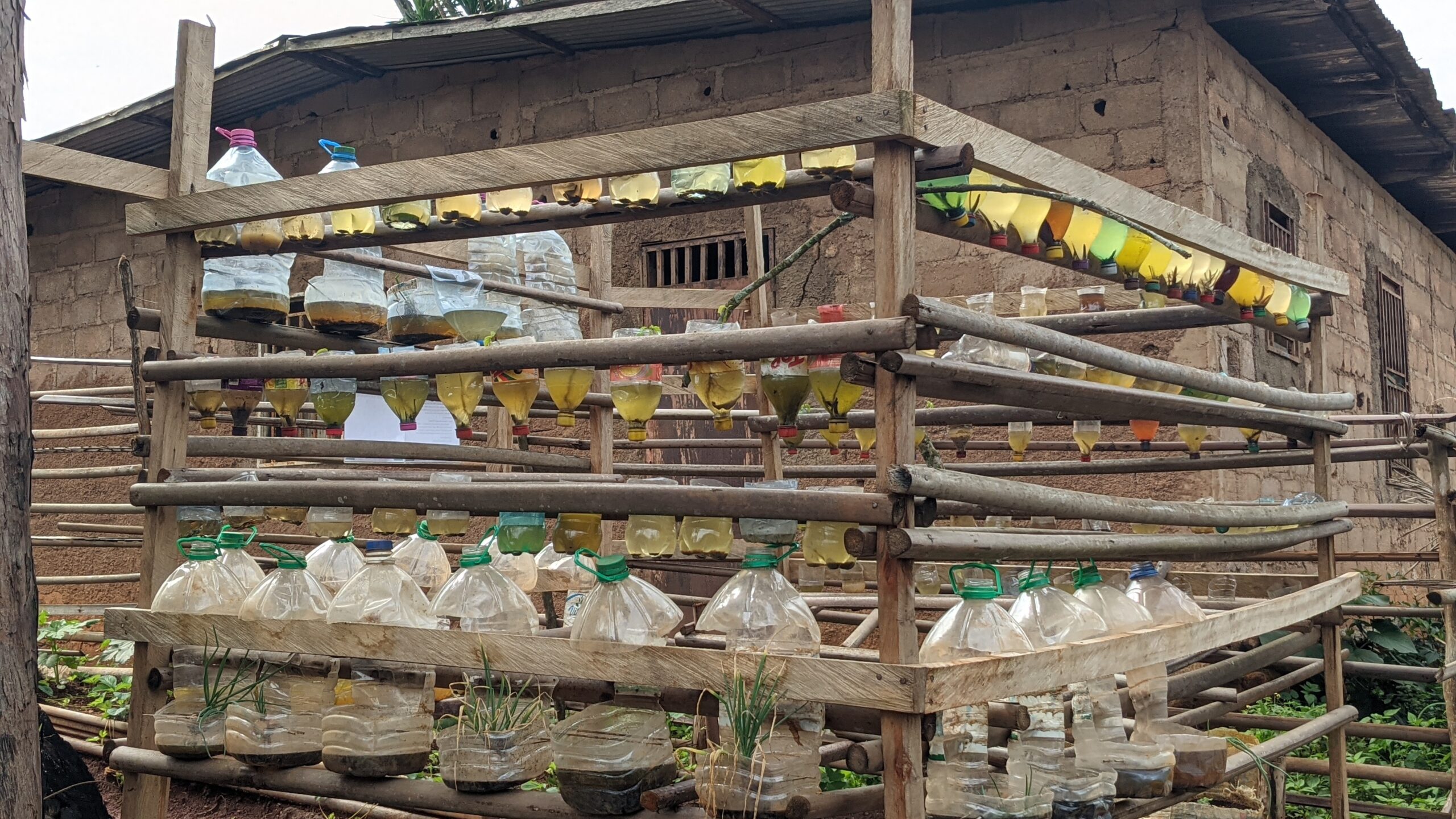
Here we showcase a beautifully constructed, multi-level wooden rack system hosting a variety of repurposed plastic containers—cleverly designed for hydroponics, bioponics, organoponics, and bio-cultivation. These systems support the growth of onions, hot peppers, and mints—three crops widely used in Cameroonian kitchens and beyond.
🌱 Our Soilless Cultivation Techniques Explained
1. Hydroponics
Hydroponics is the art of growing plants in a nutrient-rich water solution without soil. In the image, many of the inverted plastic bottles on the upper levels are hydroponic units—plants like mint are rooted in substrates such as gravel or sponge, with water and nutrients supplied directly to their roots. This method:
– Reduces water usage by up to 90% compared to soil farming.
- Enables faster growth and cleaner crops.
- Makes vertical and urban farming feasible.
2. Bioponics
Bioponics builds on hydroponics by incorporating organic biological inputs, such as compost teas, fish waste, or fermented plant juices, into the nutrient solution. It supports a living ecosystem within the water that helps feed plants naturally. We use bioponics to grow hot peppers in the nursery—yielding healthy, pest-resistant plants with minimal chemical intervention.
3. Organoponics
Organoponics is a Cuban-origin farming practice that uses organic substrates like compost, manure, or coconut coir instead of soil. In our nursery, onion bulbs thrive in organoponic containers, benefiting from the rich microbial life and nutrient density of the substrate. This technique is ideal for low-income or peri-urban areas where fertile soil is scarce.
4. Bio Cultivation
By “Bio,” we refer to a general framework of ecological, low-impact cultivation that integrates elements of agroecology and organic farming in a soilless context. We use biological pest controls, fermented fertilizers, and zero synthetic chemicals—ensuring the system is regenerative and environmentally safe.
Why This Matters
- Climate resilience: Soilless systems reduce dependency on fertile land, which is increasingly threatened by erosion, deforestation, and climate change.
- Education & empowerment: Our nursery acts as a living classroom for students, women’s groups, and young farmers
- Circular economy: By upcycling plastic waste into productive farming units, we turn pollution into production.
🌍 STONEFARMS: A Model for Africa’s Future Farming
This initiative reflects our broader mission: to promote sustainable, inclusive, and innovative farming solutions across Cameroon and Sub-Saharan Africa. We believe the future of farming lies in smart integration of traditional knowledge with modern, climate-smart practices—and this nursery is just the beginning.
Whether you’re a student, policymaker, entrepreneur, or eco-conscious citizen, we invite you to visit our nursery and experience firsthand the power of soilless agriculture in action.